
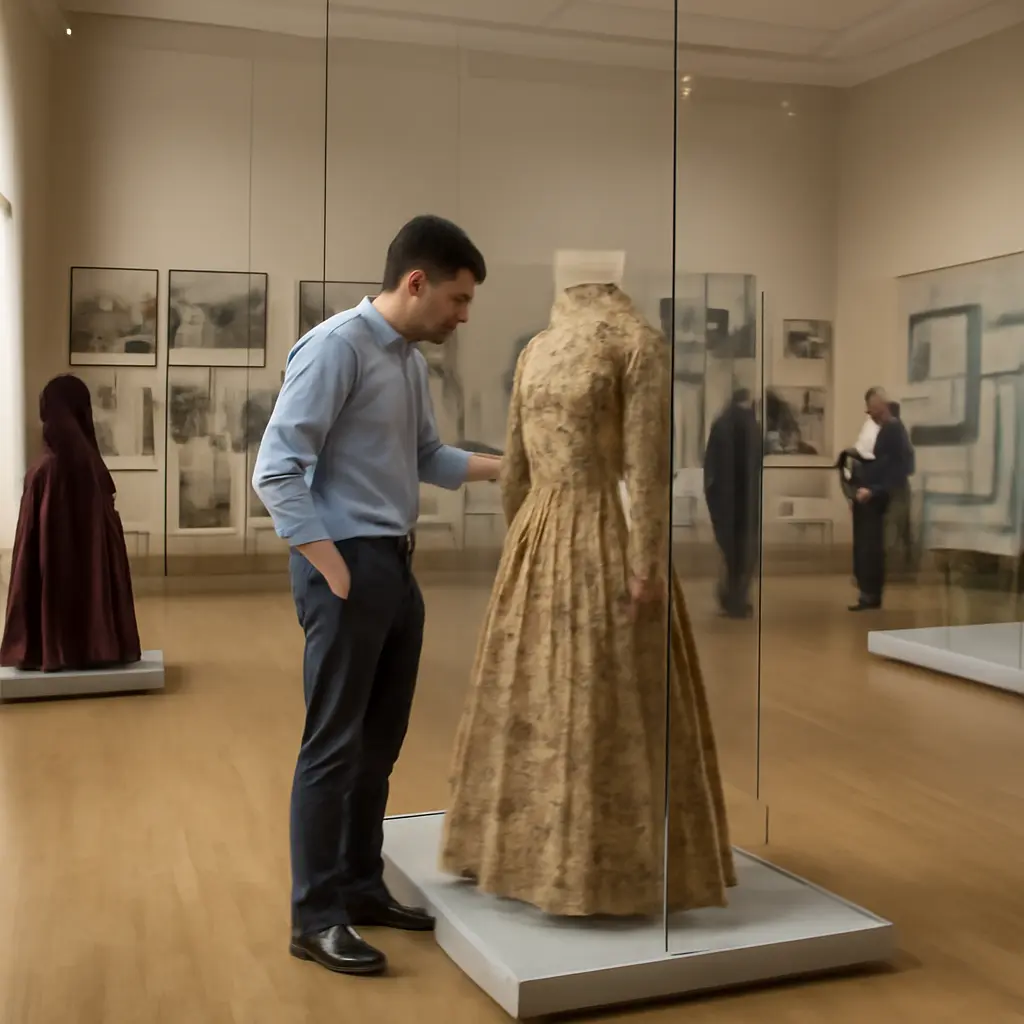
Fashion exhibitions turn clothing from objects made to be worn into objects interpreted in public. They place garments, accessories, images, and archival material in a story that can challenge familiar accounts of designers, craftsmanship, identity, and cultural exchange. From the Metropolitan Museum of Art’s record-setting “China: Through the Looking Glass” to contemporary shows examining race and representation, exhibitions can broaden who gets to tell fashion history—and how visitors understand it.
Fashion Exhibitions Build New Stories Through Curatorial Interpretation
A fashion exhibition is a curated presentation of clothing and related material that interprets fashion through a chosen theme, historical period, maker, or social question. The Victoria and Albert Museum describes fashion as a subject connected to art, design, society, and culture; in exhibition practice, that breadth allows garments to be read not just for their appearance but also for the conditions in which they were made and worn.
Curators create meaning through selection, arrangement, labels, lighting, film, and sound. Those choices matter because clothing’s original setting—movement, touch, everyday use, and the wearer’s own account—is usually absent from a museum display. An exhibition can compensate by placing a dress beside photographs, personal testimony, or manufacturing records, making visible stories that a single object cannot tell on its own.
The audience for these stories can be substantial. The Metropolitan Museum of Art reported that its 2015 exhibition “China: Through the Looking Glass” attracted more than 815,000 visitors, making it one of the museum’s most attended exhibitions. Attendance does not prove that every visitor accepted its interpretation, but it shows how fashion displays can bring cultural history to a broad public.
The garment as an interpreted object
A museum garment is both a material object and evidence of human choices. Its cut, fabric, seams, repairs, and wear can suggest how it was constructed, who could access it, and how it moved through use. Museum conservation guidance emphasizes that textiles are vulnerable to light, handling, pests, and fluctuations in environmental conditions, so display decisions must balance interpretation with preservation.
This creates a useful distinction between showing an item and explaining it. A couture gown presented alone may emphasize silhouette and workmanship; the same gown shown with a pattern, workshop records, or testimony from the people who made it can foreground labor and production. The object remains the same, but the evidence around it changes the story.
The curator as storyteller
Curatorial interpretation is the process of selecting and arranging evidence to help visitors make sense of a subject. It is not neutral: deciding which designers, communities, periods, or objects appear in a gallery shapes what counts as significant history. The International Council of Museums’ definition of a museum stresses research, collecting, preservation, interpretation, and public access—responsibilities that make exhibition storytelling both creative and accountable.
Strong interpretation distinguishes documented fact from curatorial argument. Labels can identify an object’s maker and date while also explaining uncertainty, contested attribution, or gaps in the archive. That transparency helps visitors understand not only the exhibition’s conclusions but also the limits of the evidence behind them.
Fashion Exhibition Formats Turn Runway Culture Into Museum Narratives
Fashion exhibitions take several forms, including designer retrospectives, historical surveys, thematic displays, and exhibitions centered on identity or social change. These formats differ in emphasis, but all translate clothing into a sequence of public encounters. A runway show usually presents a collection in motion and in the present tense; a museum exhibition can slow that experience down, connect it to archives, and place it in a longer historical frame.
Designer retrospectives and the career narrative
A retrospective traces a designer’s work across time, often using garments, sketches, photographs, and film to show development and recurring ideas. The Victoria and Albert Museum’s “Alexander McQueen: Savage Beauty,” first presented at the Metropolitan Museum of Art in 2011 and later shown in London, demonstrated how a retrospective can combine fashion, theatrical staging, and biographical interpretation. The Met reported that the New York presentation drew 661,509 visitors, placing it among the most popular exhibitions in the museum’s history.
Retrospectives can make artistic decisions legible, but they can also risk turning a complex career into a simplified story of genius. Including collaborators, workshop practices, institutional context, and critical responses helps avoid treating a designer as the sole author of work produced by many hands.
Thematic exhibitions and cultural exchange
A thematic exhibition groups objects around an idea rather than one maker or period. The Met’s “China: Through the Looking Glass” explored the influence of Chinese aesthetics on Western fashion and popular culture. Its scale and attendance showed the appeal of cross-cultural display, while its subject also raised questions about how museums frame borrowing, influence, and appropriation.
Thematic exhibitions are strongest when they make the direction and power of cultural exchange clear. Rather than treating cultures as fixed sources of visual inspiration, curators can identify specific historical relationships, name the people and communities involved, and explain how political or commercial conditions shaped the exchange.
Exhibitions about identity, representation, and social change
Some exhibitions use dress to examine race, gender, class, religion, disability, or national identity. The Museum at the Fashion Institute of Technology’s “Black Fashion Designers,” presented in 2016, brought attention to Black designers’ contributions and to the barriers that have affected recognition in the fashion industry. Such exhibitions can correct omissions in established accounts by treating underrepresented makers and communities as central to fashion history, not as side notes.
These displays also require careful choices about voice and authority. Consultation with relevant communities, accurate naming, and attention to lived experience can help prevent an exhibition from speaking about people without involving them. Where the historical record is incomplete, openly describing that gap is more responsible than presenting a seamless but unsupported narrative.
Exhibition Design Shapes What Visitors See and Remember
Exhibition design is the arrangement of objects and interpretive material in physical or digital space. It determines how visitors move, what they notice first, and how much context they receive. In fashion displays, design must also account for the fact that garments were made for bodies: mannequins, posture, spacing, and lighting influence whether a piece appears intimate, monumental, theatrical, or historical.
Display, lighting, and conservation
Textile display is constrained by preservation needs. The Canadian Conservation Institute’s guidance on light damage explains that light can cause irreversible fading and weakening in sensitive materials, including textiles and dyes. Museums therefore limit exposure, choose lighting carefully, and rotate vulnerable objects when practical. These measures affect the visitor experience: an exhibition may show fewer pieces at once or use replicas and digital images to reduce risk.
Mannequins and supports are equally important. A garment must be held in a way that avoids strain while conveying how it was designed to sit on a body. Display decisions can reveal construction and silhouette, but they should not imply that one body type or posture represents every historical wearer.
Labels, archives, and multimedia
Labels provide concise evidence and interpretation; archival photographs, film, audio, and digital resources add context that garments alone cannot supply. A runway clip, for example, can show movement and original presentation, while a maker’s interview can explain technique or working conditions. The most effective multimedia supports the objects rather than competing with them for attention.
Digital interpretation can also extend access beyond the gallery. Online collection records and virtual exhibitions let audiences revisit material, including items that cannot be displayed because of conservation limits. They do not fully reproduce the scale or physical presence of a garment, but they can provide searchable detail and supporting sources that a brief gallery visit may not allow.
Accessibility and visitor participation
Accessibility includes physical access, readable interpretation, sensory considerations, and opportunities for visitors with different levels of prior knowledge to engage. Clear language, seating, accessible routes, captions, and alternative formats can make an exhibition more welcoming. Visitor participation—through guided discussion, community contributions, or public programs—can further reveal how the same garment carries different meanings for different people.
A visitor survey or attendance figure can help a museum assess reach, but neither alone explains what people learned. Institutions can pair quantitative measures with interviews, comment cards, and evaluation of how visitors interpret key ideas. That evidence can inform future displays and help museums distinguish popularity from meaningful engagement.
Fashion Exhibitions Expand Access While Raising Ethical Questions
Museum storytelling can widen public access to fashion history, but it also raises questions about ownership, attribution, labor, and cultural authority. These questions are not separate from exhibition design: they affect which objects are shown, whose words appear on labels, and what visitors are invited to consider.
Provenance, credit, and the people behind the garment
Provenance is the documented history of an object’s ownership and movement. In fashion exhibitions, it can clarify who designed, made, wore, collected, or donated a garment. Naming a celebrated designer without identifying pattern cutters, embroiderers, or other makers may reproduce a narrow account of authorship. Where records exist, crediting this work gives visitors a fuller view of how fashion is produced.
Museums can also distinguish between what is known and what remains uncertain. A surviving label or invoice may establish a garment’s origin; oral histories may add context that written records omit. Combining these sources, while explaining their limitations, makes the exhibition’s claims more credible.
Cultural representation and shared authority
When exhibitions interpret clothing connected to a living community, consultation can improve accuracy and accountability. Shared authority may include community advisers, co-curators, artists, or contributors whose knowledge informs object selection and interpretation. This approach is especially important when garments carry religious, ceremonial, or personal significance beyond their aesthetic value.
Cross-cultural exhibitions should make context visible rather than treating garments as interchangeable design references. Naming the origin of motifs, describing historical relationships, and considering who benefited from the exchange can help visitors understand the difference between influence, collaboration, and appropriation.
Sustainability and fashion’s material footprint
Fashion exhibitions can connect style to the environmental and labor systems behind production. The United Nations Environment Programme has identified textiles and fashion as significant contributors to environmental pressures, including resource use, pollution, and waste. Rather than presenting sustainability as a trend alone, museums can use garments, material samples, and production records to examine durability, repair, reuse, and the costs of disposable consumption.
An exhibition can make these issues tangible by comparing a long-used or repaired garment with examples of short-lived production, or by documenting the people and processes behind materials. Such displays should avoid implying that individual consumer choices solve systemic problems; they can instead show how design, manufacturing, policy, and purchasing habits intersect.
Conclusion: Exhibitions Make Fashion History Visible and Debatable
Fashion exhibitions turn garments into public evidence through curatorial interpretation, exhibition formats, design, and ethical choices. Retrospectives can trace a career, thematic displays can examine cultural exchange, and identity-focused exhibitions can bring overlooked histories into view. Conservation and accessibility shape how those stories are encountered, while attention to provenance, credit, and community perspectives helps make them more responsible.
The museum floor does not simply preserve runway culture; it gives visitors tools to question how fashion is made, remembered, and valued. To explore the subject further, compare exhibition catalogues with collection records, look for the people and sources credited in gallery interpretation, and consider whose stories remain absent from the display.
Sources: The Metropolitan Museum of Art, “China: Through the Looking Glass,” https://www.metmuseum.org/exhibitions/listings/2015/china-through-the-looking-glass; The Metropolitan Museum of Art, “Alexander McQueen: Savage Beauty,” https://www.metmuseum.org/exhibitions/listings/2011/alexander-mcqueen-savage-beauty; Victoria and Albert Museum, Fashion Collection, https://www.vam.ac.uk/collections/fashion; International Council of Museums, Museum Definition, https://icom.museum/en/resources/standards-guidelines/museum-definition/; Canadian Conservation Institute, Agent of Deterioration: Light, Ultraviolet and Infrared, https://www.canada.ca/en/conservation-institute/services/agents-deterioration/light.html; Museum at the Fashion Institute of Technology, “Black Fashion Designers,” https://www.fitnyc.edu/museum/exhibitions/black-fashion-designers.php; United Nations Environment Programme, Sustainability and Circularity in the Textile Value Chain, https://www.unep.org/resources/report/sustainability-and-circularity-textile-value-chain-global-stocktaking.


