Fashion experiences become shareable when brands design moments that people genuinely want to photograph, discuss, and pass along—not simply when they add a branded backdrop. A social media moment is a memorable, visually legible point in an event or retail experience that encourages voluntary participation and sharing. The opportunity is significant: DataReportal estimated that 5.24 billion people used social media worldwide in January 2025. For fashion businesses, the practical approach is to combine distinctive design, easy-to-capture scenes, inclusive participation, and a clear path from online attention to useful business outcomes. This article explains those ingredients, outlines formats and measurement methods, and draws lessons from real-world fashion activations.
Designing Shareable Fashion Experiences Through Social Media Moments
What makes a fashion moment shareable?
A social media moment in fashion is a deliberately designed experience that is easy to recognize, emotionally engaging, and simple to record or describe. It may happen at a runway show, in a store, at a product launch, or through a digital campaign. The strongest moments give visitors something to do or feel—not just something to look at—and let them share it in their own voice.
This distinction matters because a photogenic installation alone does not guarantee attention or favorable brand outcomes. The moment should connect naturally to the collection, audience, or brand story. A custom fitting, a live styling demonstration, or a participatory runway can offer both an image and an experience worth discussing.
Why social sharing matters to fashion brands
Social platforms give fashion audiences ways to discover trends, creators, products, and events beyond a brand’s owned channels. DataReportal’s January 2025 global overview estimated 5.24 billion social media user identities; the figure represents identities rather than a count of unique individuals. The scale helps explain why an event designed for sharing can reach people who never attend in person, while also underscoring the competition for their attention.
Sharing can extend an event’s life through guest posts, creator content, press coverage, and later search or discovery. But reach is not the same as impact. Brands should connect activity to an objective—such as awareness, qualified traffic, product consideration, or attendance—and assess the results against that objective instead of treating likes as proof of sales.
Building Social Media Moments Around Fashion Experiences
A useful planning principle is to design the experience first and its documentation second. The moment should make sense to someone in the room, then translate clearly into a photo, short video, or story. The following formats are related but distinct ways to create that value.
Visual environments and photogenic installations
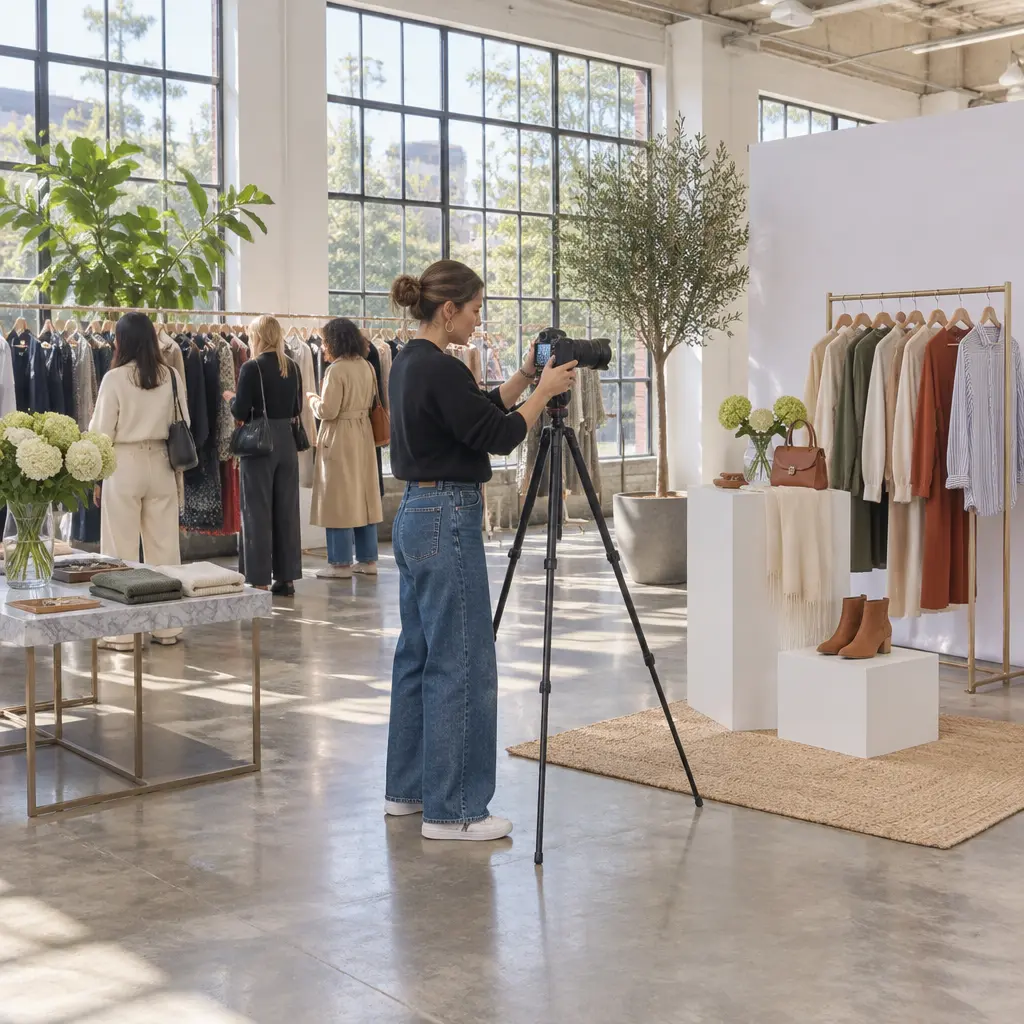
A visual environment is a physical setting designed to communicate a brand idea through composition, color, light, material, and movement. Examples include a sculptural product display, a distinctive fitting-room corridor, or a set that changes as visitors move through it. These are sometimes called Instagrammable spaces, but a recognizable visual is more effective when it expresses the collection rather than functioning as unrelated decoration.
Designers should consider the visitor’s actual camera view: lighting, queue position, accessibility, background clutter, and whether people can capture the product without blocking others. A clear visual focal point can help a moment remain identifiable when reposted or viewed on a small screen. However, the installation should not make participation conditional on posting, tagging, or surrendering personal data.
Interactive styling and participatory experiences
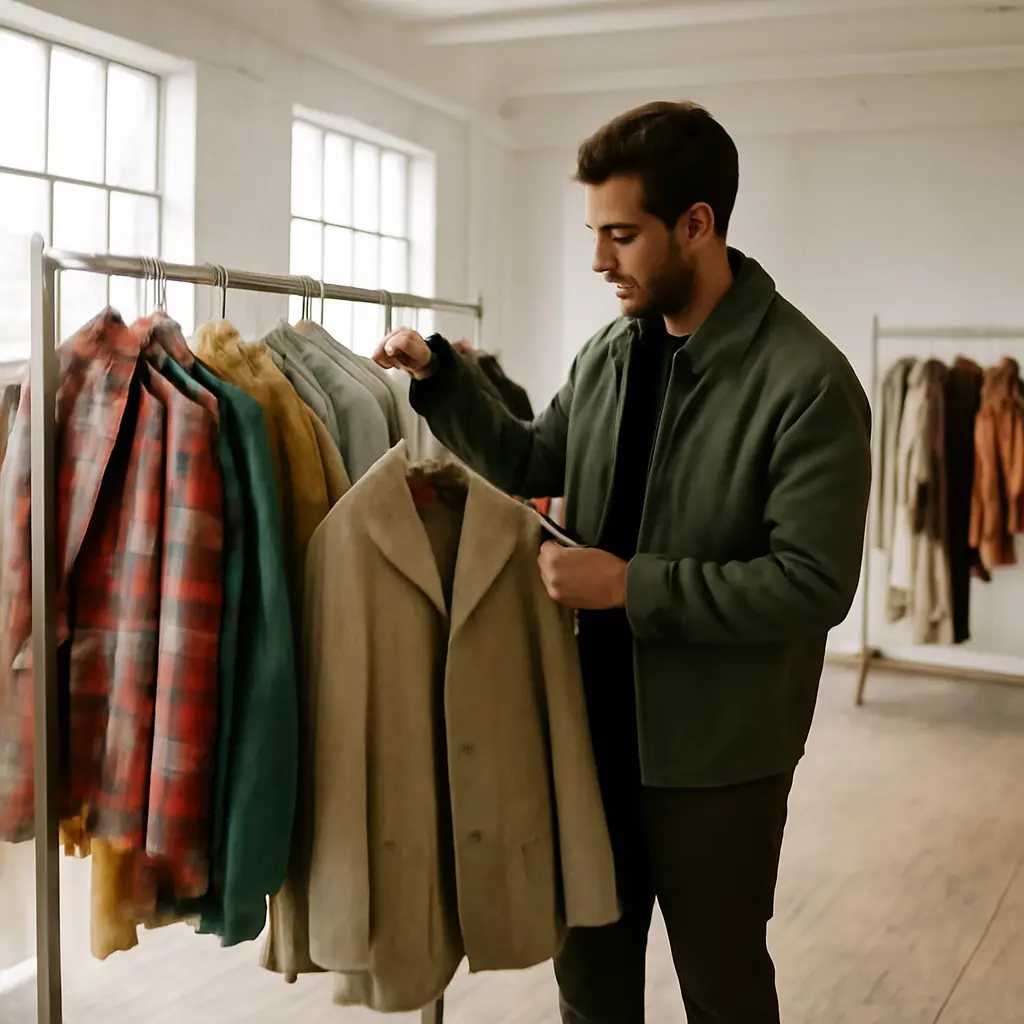
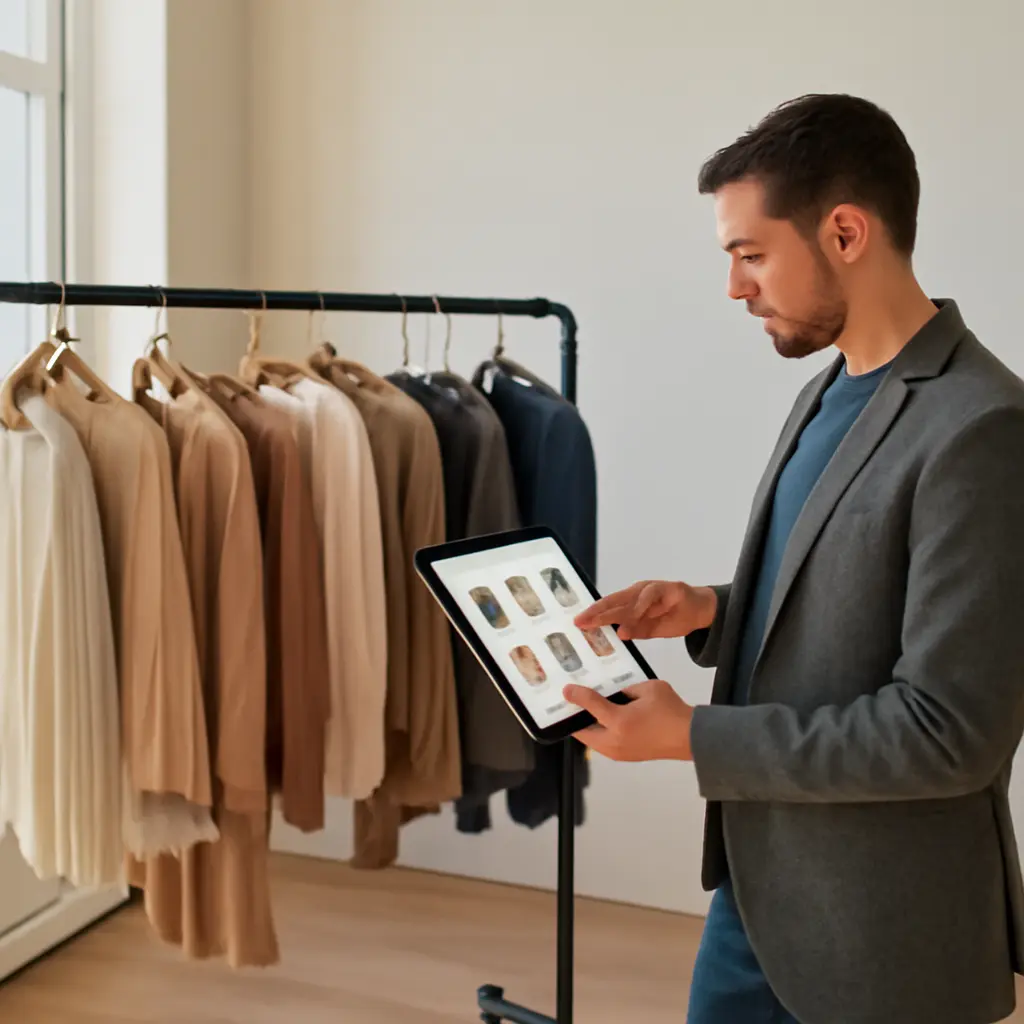
Interactive fashion experiences invite visitors to shape what happens, rather than only observe it. Examples include guided styling, customization stations, garment-care demonstrations, or digital tools that let guests explore different looks. Participation creates a natural narrative—what the visitor chose, changed, or learned—which can make a post more personal and informative.
The activity should be easy to understand and offer a real benefit, such as a useful styling idea or a chance to see craftsmanship up close. Brands should also provide non-digital alternatives and avoid assuming that every guest wants to be photographed. Clear consent practices are particularly important when visitors, staff, or children could appear in content.
Live events, runway moments, and creator participation
Live fashion events create time-sensitive moments through performance, reveal, movement, and audience reaction. A runway presentation, designer conversation, or live customization session can produce material for short-form video as well as longer editorial coverage. Creator participation may help a brand reach a relevant community, but the creator’s audience and style should fit the event rather than be selected on follower count alone.
Planning should account for both the live audience and remote viewers. Useful measures include a clear line of sight, adequate lighting, a predictable schedule, and access to approved event information or image assets. The event should still feel worthwhile without a phone: if every guest is positioned only as a content producer, the experience risks feeling staged and less credible.
Digital extensions and user-generated content
A digital extension carries an in-person experience into online spaces or lets remote audiences participate. It may include a live stream, a digital lookbook, a virtual styling consultation, or a campaign prompt that invites customers to show how they wear a piece. User-generated content (UGC) is content created by customers or other members of the public, rather than produced solely by the brand.
UGC can provide varied perspectives and make a campaign feel less like a conventional advertisement, but brands should obtain permission before reusing a person’s post in paid or owned marketing. Spell out any campaign terms, disclose incentives, and moderate submissions for safety and relevance. A hashtag may organize participation, but it cannot by itself ensure meaningful engagement or lawful reuse.
Measuring the Performance of Shareable Fashion Moments
Once the experience is designed, measurement should follow the audience journey: exposure, interaction, consideration, and action. This helps distinguish an attractive event from one that also advances a business goal.
Reach, engagement, and content quality
Reach estimates how many accounts or people encountered content, while impressions count how many times it was displayed. Engagement measures actions such as comments, saves, shares, or video completion, depending on platform reporting. These measures are not interchangeable, and platform definitions can vary.
Brands can also assess the quality of participation: Are people discussing the collection, asking product questions, or sharing styling ideas? Track branded mentions and campaign tags alongside a sample review of public posts, with care to respect platform rules and privacy. Report the measurement period, channels, and any paid amplification so results are interpretable.
Traffic, conversion, and business outcomes
A conversion is a defined action, such as a product-page visit, appointment booking, newsletter signup, or purchase. Campaign-specific landing pages, event codes, and tagged links can help connect social activity to these actions. Because customers may encounter several messages before acting, attribution should be treated as an estimate rather than definitive proof that one post caused a sale.
Pair platform analytics with measures appropriate to the event: attendance and no-show rates for a launch, bookings for a styling service, or product inquiries for a collection. Compare results with a baseline or similar activation where possible. Also account for production, staffing, creator fees, and media spending when assessing efficiency.
A practical evaluation framework
Before launch, write down the intended audience, the action the experience should encourage, and how that action will be measured. A compact framework can keep creative and commercial decisions aligned:
-
Define the experience’s purpose and the audience it is designed for.
-
Choose a small set of measures, such as qualified reach, saves, event attendance, or bookings.
-
Establish a baseline and identify the data sources before the event begins.
-
Review audience feedback and operational issues, not only platform totals.
-
Document what to retain, change, or test in the next activation.
A simple chart can compare intended outcomes with observed results—for example, “discovery” against reach, “consideration” against product-page visits, and “action” against bookings or purchases. Label the measures and reporting period clearly, and do not combine unlike metrics into a single score without explaining the method.
Real-World Lessons from Fashion Activations
Burberry’s Art of the Trench
Burberry’s Art of the Trench project invited people to share photographs wearing the brand’s trench coat, turning a signature garment into the focus of a participatory digital showcase. The format illustrates how a brand can connect a product with personal styling rather than relying only on campaign imagery. It also highlights a continuing consideration: customer photographs and likenesses require clear permissions and thoughtful moderation when a company republishes them.
Fashion Week as an event-to-content system
Fashion Week shows demonstrate how a single live presentation can generate runway imagery, backstage access, interviews, creator posts, and audience commentary. The experience reaches beyond invited attendees through coverage and social distribution. The lesson is not simply to create a dramatic reveal; it is to coordinate access and content so that different audiences receive a coherent story while the live event remains functional.
What brands can learn from both examples
The examples point to three durable practices: anchor the moment in a recognizable product or idea, give people a meaningful role, and plan for content after the event without treating audiences as free production resources. Brands should adapt the format to their own customers and capabilities rather than copying a high-profile activation whose budget or audience may be very different.
Conclusion: Make Fashion Moments Worth Sharing
Shareable fashion experiences bring together a clear visual identity, genuine participation, accessible content, and measurement tied to a real objective. Visual installations, interactive styling, live events, and digital extensions can each create social media moments, but relevance and respect for the audience determine whether sharing feels natural. Global social media use makes these experiences potentially far-reaching; it does not guarantee attention, trust, or sales.
Fashion teams can start with one audience need, build a moment that serves it, and define success before launch. Review both performance data and participant feedback, secure consent for content reuse, and use the findings to improve the next experience. Further reading on platform measurement, creator disclosures, and privacy can help teams turn inspiration into responsible practice.
Sources: DataReportal, Digital 2025: Global Overview Report, https://datareportal.com/reports/digital-2025-global-overview-report; Burberry, Art of the Trench, https://artofthetrench.burberry.com/; Federal Trade Commission, Disclosures 101 for Social Media Influencers, https://www.ftc.gov/business-guidance/resources/disclosures-101-social-media-influencers